Kissimmee Prairie Preserve State Park rewards travelers who are willing to trade a packed attraction schedule for an enormous sky, long grassland views, and the possibility of seeing wildlife found in few other places. From Okeechobee, it makes a memorable nature-focused day trip—and a very different companion to time spent on Lake Okeechobee.
The preserve protects the largest remaining tract of Florida dry prairie, part of the Everglades headwaters and an ecosystem shaped by both seasonal water and fire. Its remoteness is the point. Visitors come to watch birds, walk or cycle old service roads, photograph wildflowers, take a slow wildlife drive, and—when they have arranged legal after-hours access—experience one of Florida's best-known dark skies.
This guide covers the practical details that matter: when to arrive, what the entrance fee covers, how to plan around heat and thunderstorms, which animals to look for, and why stargazing requires more preparation than simply staying past closing time.
As checked August 7, 2026, the official hours and fees page lists daily hours of 8 a.m. to sundown and admission of $4 per vehicle for two to eight people. The park uses an honor box, so carry correct change. Recheck official alerts, weather, and access conditions on the morning of the trip.
Why Kissimmee Prairie belongs on an Okeechobee itinerary
Many Florida trips are built around coasts, springs, or theme parks. Kissimmee Prairie shows another landscape entirely: broad dry prairie interrupted by wetlands, sloughs, hammocks, and scattered palms. The official park overview describes a 54,000-acre preserve where rare, threatened, and endangered species still find habitat. Human-made objects can disappear from the horizon, leaving a sense of scale that is difficult to find elsewhere in the state.
The visit works especially well for birders, photographers, hikers, cyclists, families studying Florida ecology, and travelers who simply need a quiet half-day outdoors. It can also deepen a Lake Okeechobee trip. The lake, ranch country, and prairie are connected parts of the region rather than unrelated attractions, and seeing more than one helps visitors understand why Okeechobee feels different from coastal Florida.
Do not approach the preserve like a zoo with scheduled sightings. Wildlife moves with light, temperature, water, fire history, and season. A successful visit might mean seeing a caracara from the park road, hearing unfamiliar birds, finding fresh tracks, watching storm clouds build across the horizon, or noticing dozens of small prairie flowers rather than checking off a famous species.
Plan the arrival before you leave town
The preserve's published location is on Northwest 192nd Avenue in northern Okeechobee County. The park office sits five miles inside the front gate, so reaching the boundary is not the end of the drive. Download the official park map and current visitor information before leaving reliable service, fuel the vehicle in town, and avoid building the day around a tight reservation immediately afterward.
Summer planning deserves particular care. August brings heat, humidity, intense sun, insects, and fast-forming thunderstorms. Start early, carry ample water, and choose a turnaround point based on the least heat-tolerant person in the group. A prairie road or trail can offer very little shade. If thunder is audible, leave exposed areas and follow current park guidance; a wide-open landscape is not a place to wait out lightning.
Pack binoculars, a camera with a strap, sun-protective clothing, a hat, sunscreen, insect repellent, closed-toe shoes, snacks, and a rain layer. Download or print the map, and tell someone the plan. Leave plants, feathers, nests, bones, and other natural objects where they are. Pack out everything brought in.
Birding and wildlife watching without disturbing the prairie
Kissimmee Prairie is one of the last strongholds of the federally endangered Florida grasshopper sparrow, a secretive bird dependent on dry prairie. Florida State Parks explains that trained staff spend months surveying and protecting nests. Visitors should treat that conservation work as a reminder: stay on authorized routes, never use playback to pressure a rare bird, do not approach nests, and accept that responsible birding does not guarantee a photograph.
The park's current birding and wildlife guide also highlights burrowing owls, crested caracaras, wood storks, swallow-tailed kites, and white-tailed kites. Wetlands, dry prairie, and hardwood hammocks create different viewing opportunities. Dawn and dusk are often productive, and the park recommends driving no faster than 25 mph on the main road—both for better sightings and to avoid wildlife collisions.
Scan fence posts, snags, and the sky before walking farther. Stop the vehicle only where it is safe and permitted, and keep voices low. Beyond birds, visitors may encounter white-tailed deer, river otters, gopher tortoises, snakes, bobcats, coyotes, and many butterflies. Florida panthers and black bears have been confirmed in the broader preserve, but they are uncommon sightings. Never feed wildlife, and give every animal an exit route.
Choose a trail plan that matches the conditions
Florida State Parks lists hard-surface roads for bicycling and roughly 100 miles of trails and service roads shared by hikers, cyclists, equestrians, and park vehicles. That number should not tempt a first-time visitor into an ambitious route. Prairie miles feel longer in heat, headwinds, wet ground, or full sun. Ask park staff what is currently passable, then choose an out-and-back distance that leaves a generous reserve.
Families may be happiest combining the visitor center, a slow drive, a short walk, and a picnic rather than attempting a long hike. Cyclists should carry repair supplies and more water than they would for a shaded urban trail. Helmets are strongly recommended for everyone and required by Florida law for riders age 16 and younger.
Pets must remain on a six-foot hand-held leash and are allowed on service roads, but the park says they are not allowed on the red-marked Hammock Trail. Heat and wildlife can make a pet visit difficult even where animals are permitted. Check the official pet policy and consider whether the day's temperature makes leaving a pet safely at the lodging the kinder choice.
Dark-sky viewing requires advance access
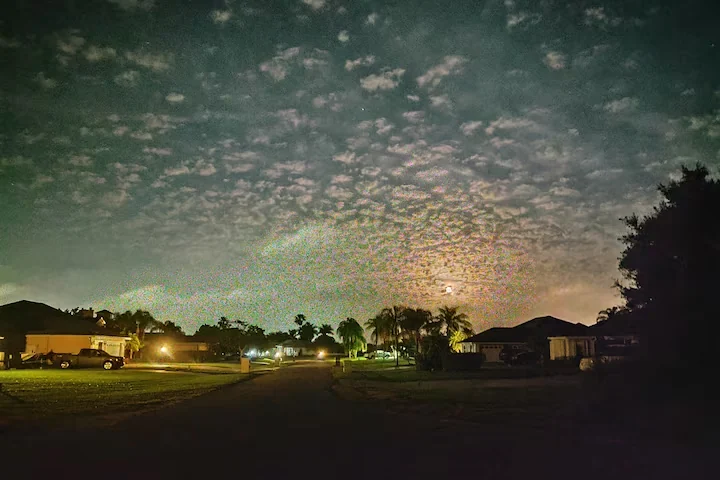
Kissimmee Prairie became Florida's first internationally recognized Dark Sky Park in 2016. That designation makes it tempting to plan a spontaneous sunset-and-stars visit, but normal day-use access ends at sundown. The entrance closes 15 minutes after sunset, and only registered campers or qualified after-hours pass holders may enter after dark.
The official dark-sky guidance lists three principal options: reserve a family or equestrian campsite, reserve an astronomy-pad site, or—if you hold a Florida State Parks Family Annual Pass—arrange an after-hours permit through the office during regular hours. Astronomy-pad users must arrive before sunset and contact the ranger on duty. After dark, astronomy sites permit only red-spectrum lights and do not allow campfires.
In other words, a vacation-home stay in Okeechobee is ideal for a daytime prairie trip, but it does not by itself authorize a late-night park visit. If the group wants true dark-sky access, make the required park arrangement separately and well in advance. Check moon phase, cloud cover, campground availability, and all current rules before building the trip around stars.
A comfortable one-day prairie itinerary
Travelers who want a broader outdoor weekend can pair the prairie with a separate Lake Okeechobee day. Our Lake Okeechobee fishing guide explains launch planning, licenses, and local supplies, while the family airboat guide offers another way to explore the region's wetlands and wildlife.
Make Okeechobee the comfortable home base
A remote landscape is easier to enjoy when the rest of the trip is simple. Staying in Okeechobee lets the group buy groceries, fuel up, eat locally, and return to a full kitchen and familiar gathering space instead of adding a long onward drive after a hot day outside.
Okeechobee Oasis is a five-bedroom vacation home for groups of 16 or more, with ten beds, two living areas, a private heated saltwater pool, hot tub, fenced yard, laundry, and private parking. After the prairie, guests can cool off, wash trail clothes, prepare dinner together, and compare bird lists without splitting into separate rooms.
Check live availability and request a direct-booking quote for your group.
For more regional ideas, Visit Okeechobee County's official hiking and biking guide connects Kissimmee Prairie with other nearby trails and wildlife areas. Keep the itinerary flexible, confirm volatile details directly with Florida State Parks, and give this landscape the unhurried attention it deserves.
Local feature FAQ
What to know before you go
What are the current hours and entrance fee at Kissimmee Prairie Preserve State Park?
As checked August 7, 2026, Florida State Parks lists the preserve as open from 8 a.m. until sundown every day of the year. Day-use admission is $4 per vehicle for two to eight people, payable at the honor box with correct change. Recheck the official park page before leaving.
Can day visitors stay after sunset to stargaze?
Ordinary day use ends at sundown. After-hours access requires an eligible arrangement such as a reserved campsite or astronomy pad, or an after-hours permit available to Florida State Parks Family Annual Pass holders. Astronomy-pad guests must arrive before sunset and follow special light rules.
What wildlife might visitors see?
The preserve highlights crested caracaras, burrowing owls, wood storks, swallow-tailed kites, white-tailed deer, gopher tortoises, and many other prairie species. The endangered Florida grasshopper sparrow lives here, but sightings are never guaranteed and sensitive wildlife should be given plenty of space.
What should families bring for a prairie visit?
Bring more drinking water than expected, sun protection, insect repellent, sturdy closed-toe shoes, rain protection, snacks, binoculars, a paper or downloaded map, and correct change for the honor box. Keep the plan modest in hot or stormy weather.
Published August 7, 2026. This independent travel guide was prepared from current Florida State Parks, Florida Park Service, and Visit Okeechobee County information checked August 7, 2026. Hours, offerings, policies, seasons, and availability can change; confirm current details directly with the featured business before visiting or booking.